How to Make the Best Dairy Free Buttermilk
Last Updated on April 28, 2026 by Annie
After testing homemade buttermilk made with almond, oat, soy, and coconut milk we have figured out the best dairy-free milk to use for making buttermilk. This simple 2 ingredient recipe yields the best vegan buttermilk for cooking and baking.
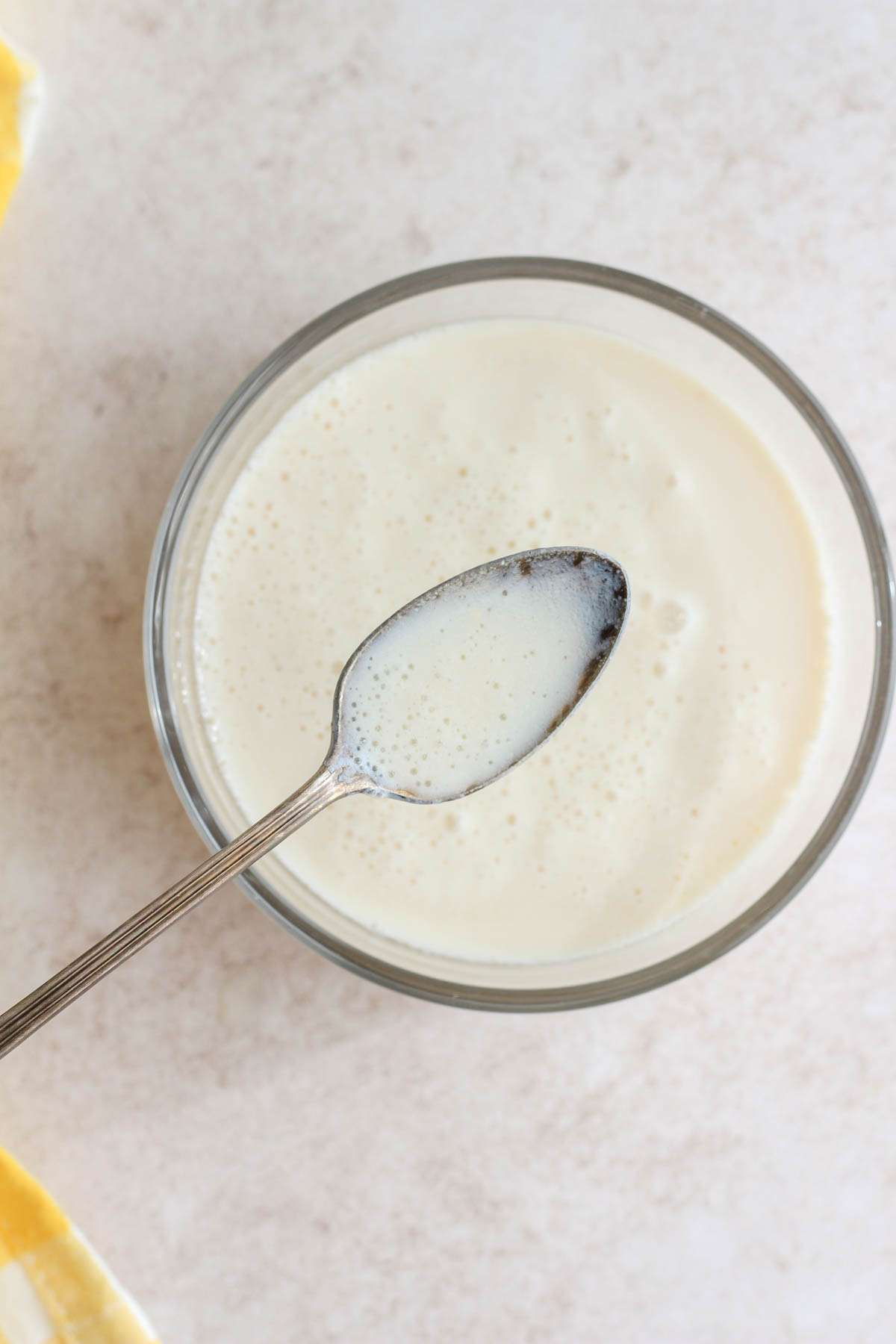
I published a recipe for homemade dairy free buttermilk 7 years ago. This was one of the first recipes I published on the site. While the process for making vegan buttermilk remains the same, my curiosity surrounding the recipe grew.
I started to wonder, was this really the best way to make buttermilk? What plant milk base was the most similar in consistency to traditional buttermilk? Do different plant milks react differently in a buttermilk recipe?
With this new mindset surrounding vegan buttermilk, I set out on a quest to discover what truly makes the best dairy-free buttermilk and give you the confidence to make dairy free buttermilk at home with ingredients you already have on hand.
From the type of acid you choose to use to the kind of vegan milk that works best, you will learn how to make, store, and use your vegan buttermilk like a pro.
This deep dive on plant-based buttermilk took me on a project that was a little Princess Pancake meets The Food Lab. Buckle up for the science lesson you didn’t know you needed and get ready to level up your dairy-free baking with this vegan buttermilk recipe.
What is Buttermilk?
Traditional buttermilk is a fermented drink made when raw milk separates from the cream. During separation lactic acid in the milk begins fermenting the remaining milk. As the milk ferments the consistency gets thicker and the pH of the milk lowers.
What we typically find at the store is called cultured buttermilk. This is made from pasteurized milk mixed with a cultured bacteria resulting in a thick tangy product similar to a yogurt.
For the purpose of this recipe we are looking to make a cultured vegan buttermilk.
Can You Make Buttermilk at Home?
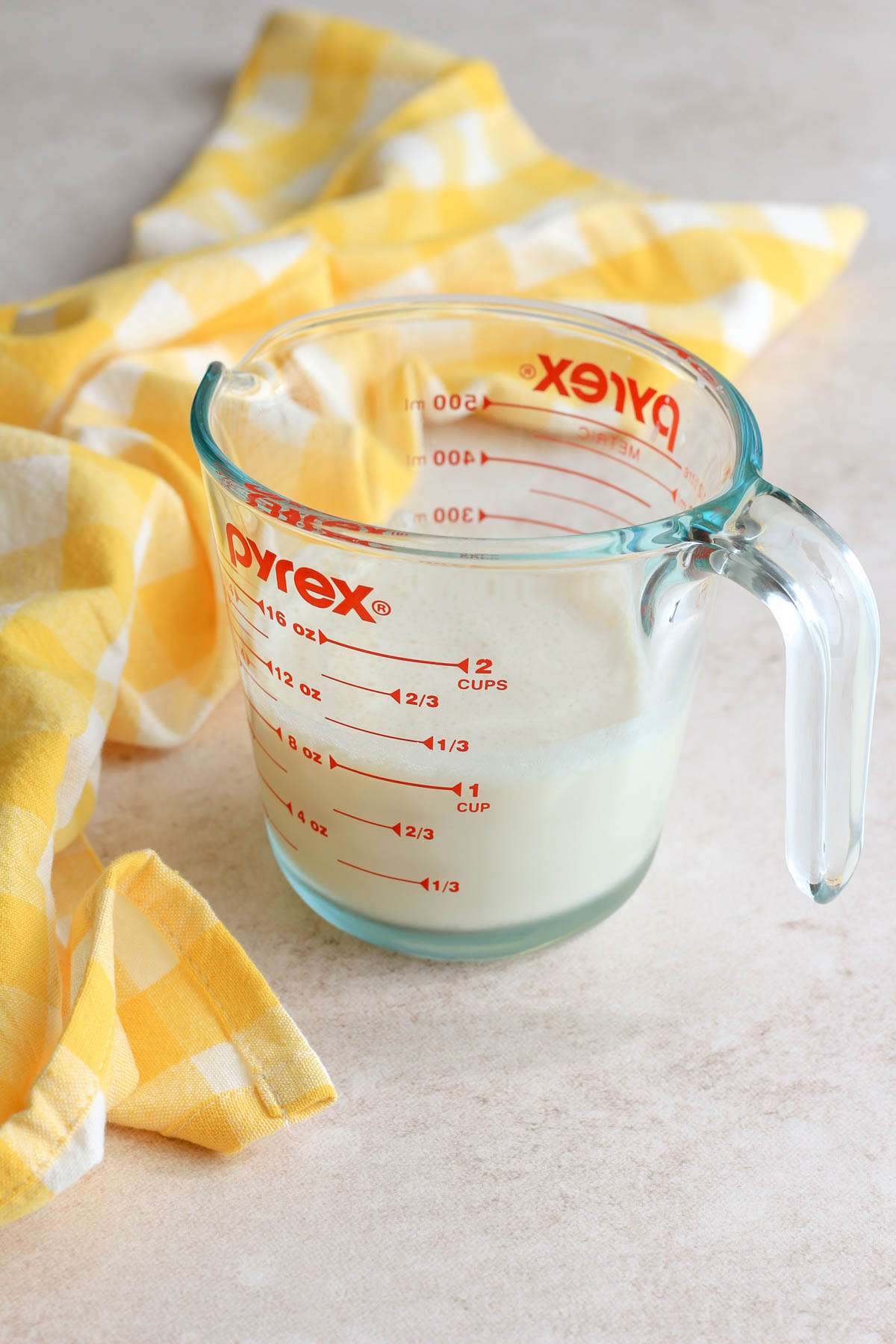
The most common method for making buttermilk is to mix pasteurized milk with lemon juice or vinegar and allow the mixture to sit 5-10 minutes until the milk begins to thicken.
The process for making plant-based buttermilk is the exact same. Use a dairy-free buttermilk and mix with either lemon juice or vinegar, and let it sit at least 5 minutes.
After 7 years of baking with plant-based milks I couldn’t help but wonder if all dairy-free milk reacted the same and which dairy-free milk resulted in the closest replacement to cultured buttermilk.
What is the best Plant-Based Milk for Dairy-Free Buttermilk?
Here is where we are about to get a little scientific. Figuring out what vegan milk makes the best buttermilk took some testing. I was inspired by The First Year Blog’s approach to testing the ideal ratio of acid to milk for making traditional buttermilk.
The method: For this analysis I selected 4 of the most common types of plant milk:
- Almond Milk
- Oat Milk
- Soy Milk
- Coconut Milk
To maintain consistency, I used the Malk brand of each product to make sure no other ingredient in the milk was reacting with the acid.
The most widely accepted method for making buttermilk recommends using 1 Tablespoon of acid, lemon juice or white vinegar.
Beth at the First Year Blog found 2 Tablespoons of acid to create the best pH and consistency for homemade buttermilk.
For curiosity sake, I tested both 1 and 2 Tablespoons of each type of acid in each of the dairy free milks. Here is how the plant milk curdled.
Cultured Dairy Buttermilk
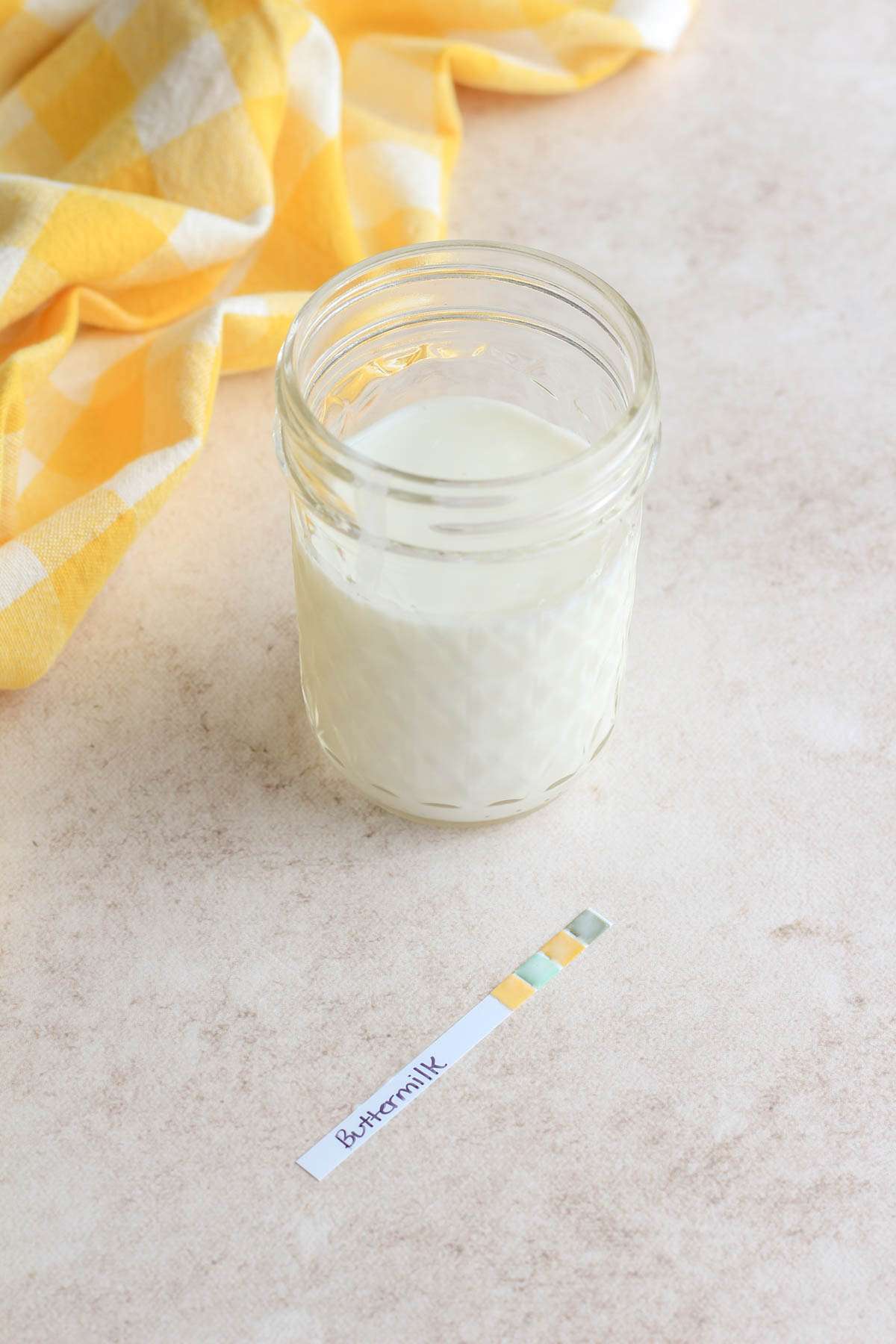
In order to know what vegan buttermilk is the most similar to cultured dairy buttermilk we first tested the consistency and pH of the buttermilk.
- pH 5
- Consistency was thick, creamy, and slightly curdled.
Now that we have the baseline for what to measure the plant milk alternatives to we can begin testing.
Almond Milk Buttermilk
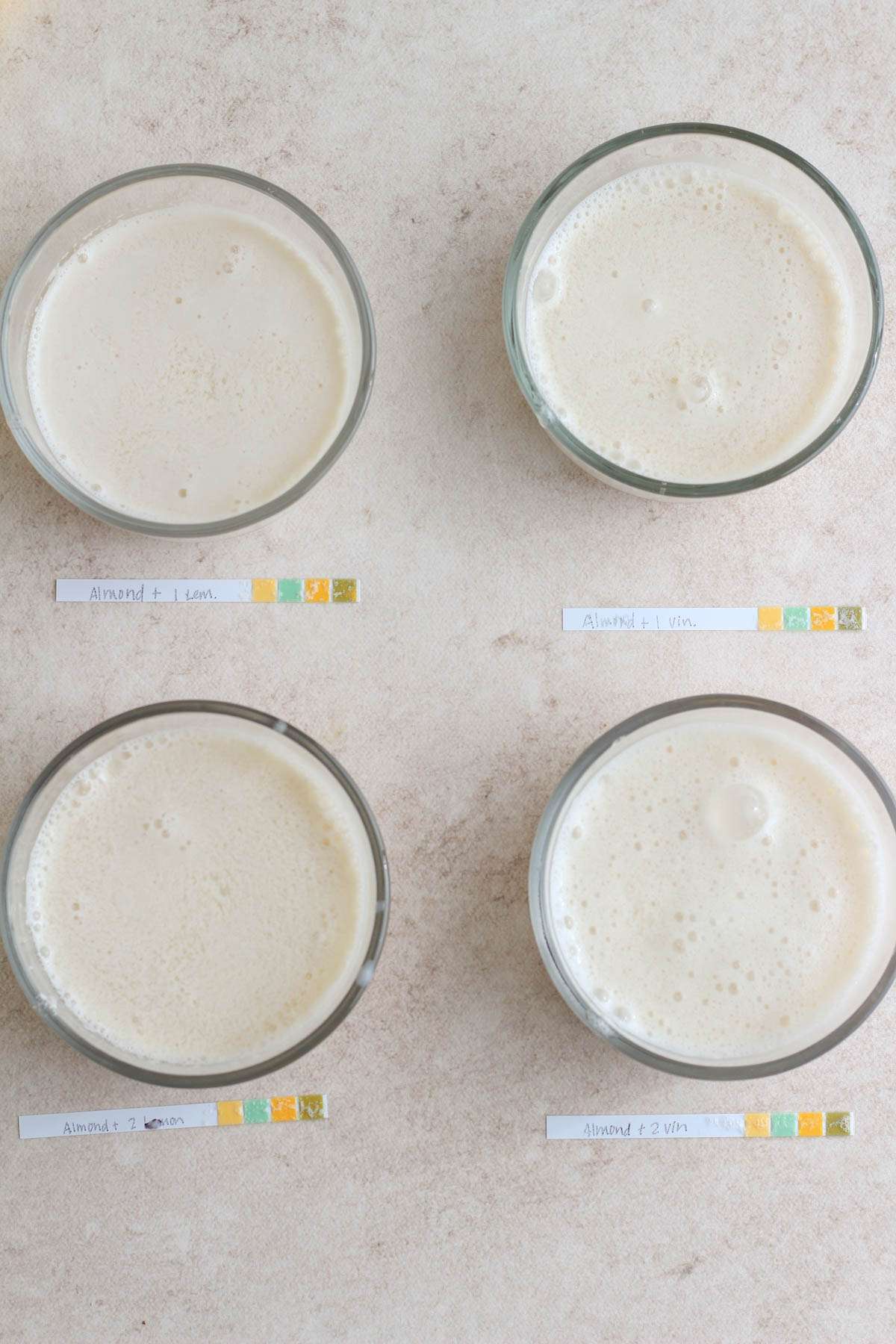
Almond milk buttermilk began to “curdle” quickly. Each of the almond milk buttermilks had:
- pH 4
- Thinner consistency than the dairy buttermilk but was noticeably thicker than before the acid was added to the bowl.
- The change in quantity of lemon or vinegar did not impact the resulting pH.
Oat Milk Buttermilk
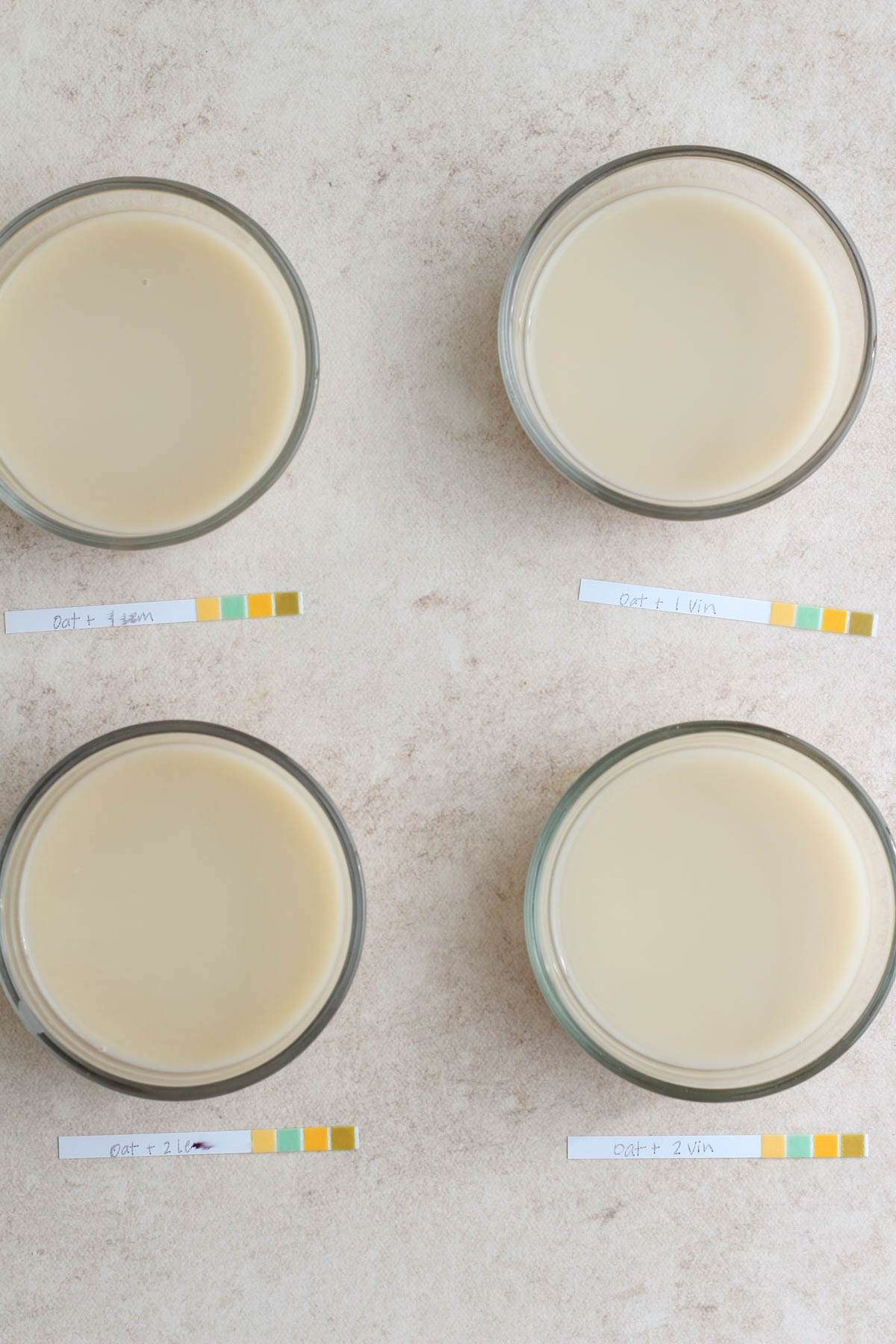
Oat milk buttermilk felt very anticlimactic after the instant curdling of the almond milk. Each of the oat milk buttermilks had:
- pH 4
- Very thin consistency, it almost felt like there was no reaction with the acid.
- The change in quantity of lemon or vinegar did not impact the resulting pH.
Soy Milk Buttermilk
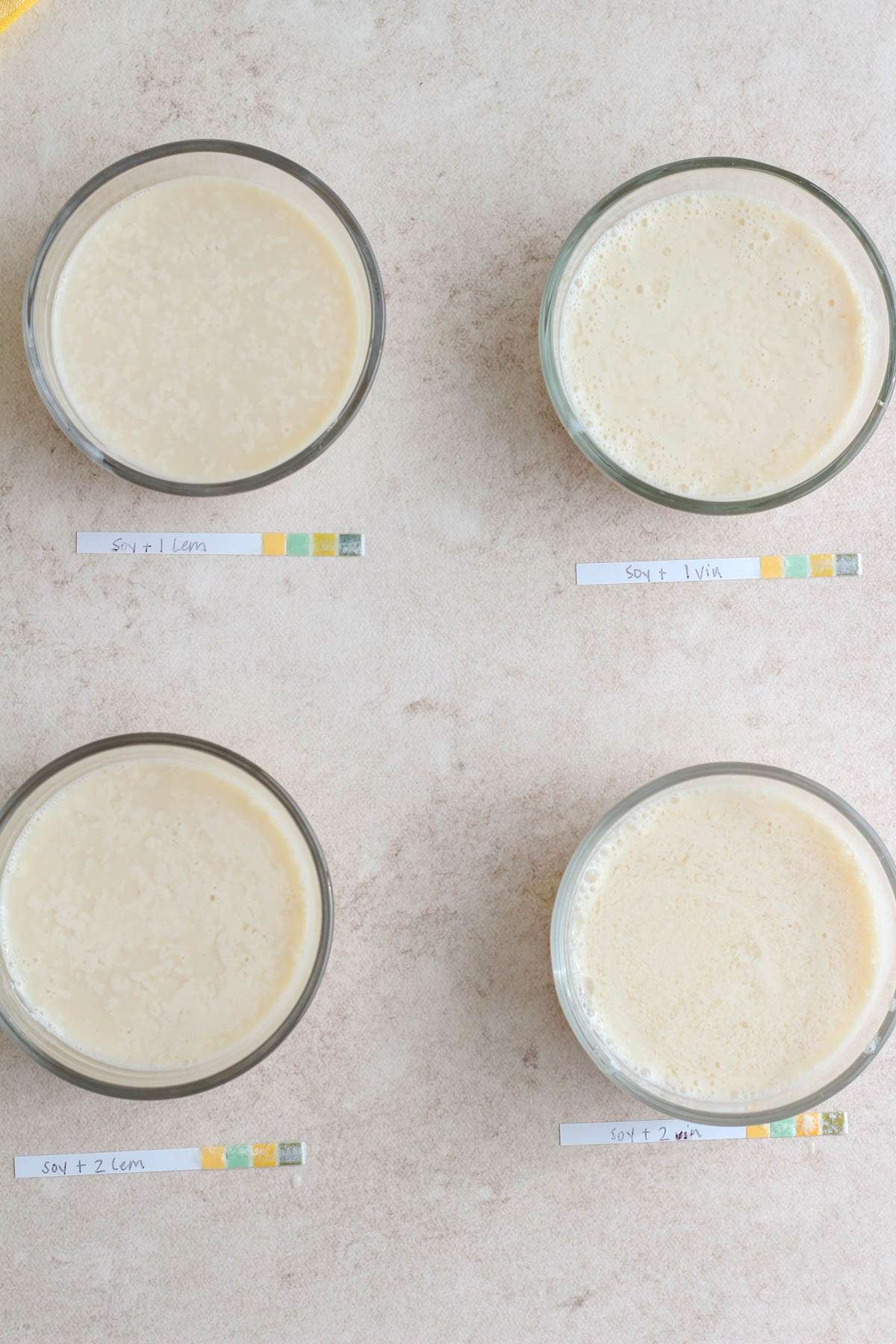
As someone who does not often grab a bottle of soy milk, I was pleasantly surprised by the reaction. Soy milk buttermilk began to “curdle” quickly, just like with almond milk. Each of the soy milk buttermilks had:
- pH 5
- Thick and noticeably curdled appearance.
- No change based on the amount of lemon or vinegar added to the milk.
Coconut Milk Buttermilk
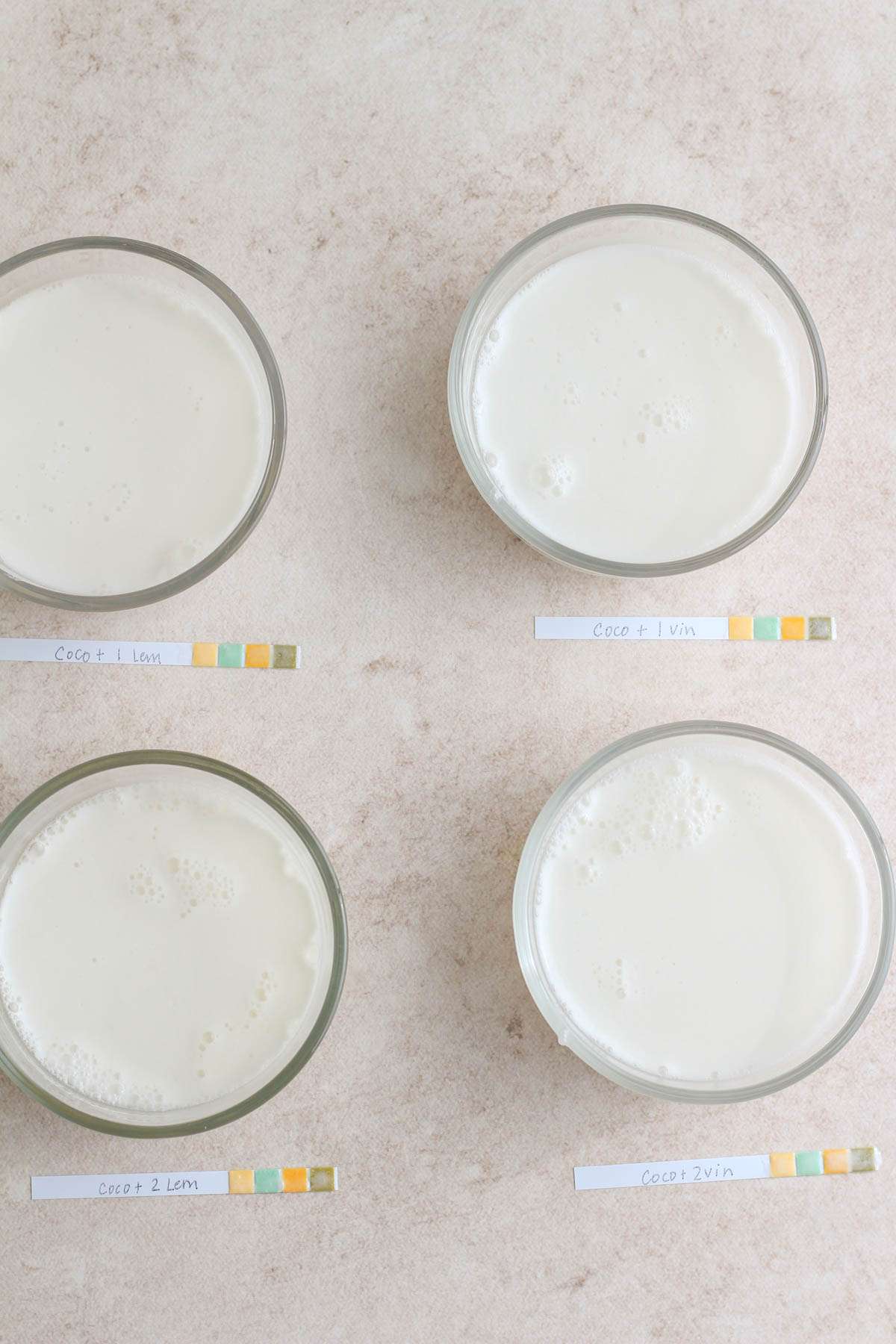
The coconut milk buttermilk felt very anticlimactic after having such a slam dunk with the soy milk. Each of the coconut milk buttermilks had:
- pH 4-4.5
- Slightly thicker consistency that separated the fat from the liquid quickly.
- Vinegar gave a higher pH (4.5) than lemon (pH 4) with the coconut milk.
Results for the Best Vegan Milk for Buttermilk
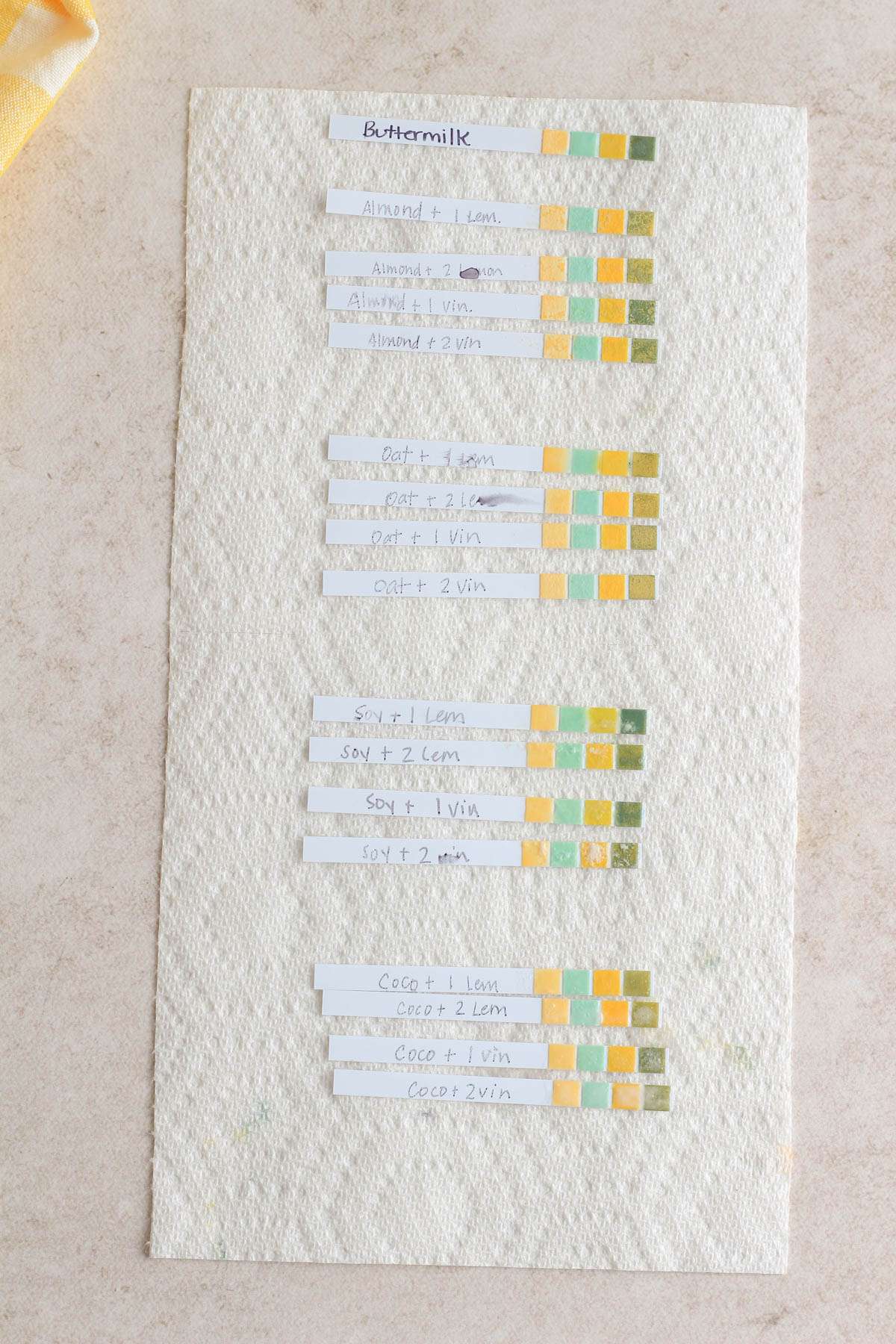
To rank the milks from best to worst for making dairy-free buttermilk I would place them as follows:
- Soy milk– The closest pH and consistency to cultured buttermilk.
- Almond Milk- Had the second best consistency to cultured buttermilk.
- Coconut Milk- Thickened a little but not too much.
- Oat Milk- Remained thin and watery even after 10+ minutes of rest time.
Some other things worth noting from this experiment include:
- Lemon juice and vinegar both reacted the same and can easily be used interchangeably in the recipe.
- The amount of acid mixed into the plant milk did not really change the pH or the consistency of the vegan buttermilk. I would err on the side of 1 Tablespoon simply to use less product.
How to Make Dairy Free Buttermilk
Ingredients You’ll Need
For this recipe you will need just two simple, pantry-staple ingredients:
- Non-dairy milk– After through testing I would recommend either an unsweetened, unflavored soy milk or almond milk.
- Lemon juice or vinegar– You can use either to help ferment the plant-based milk.
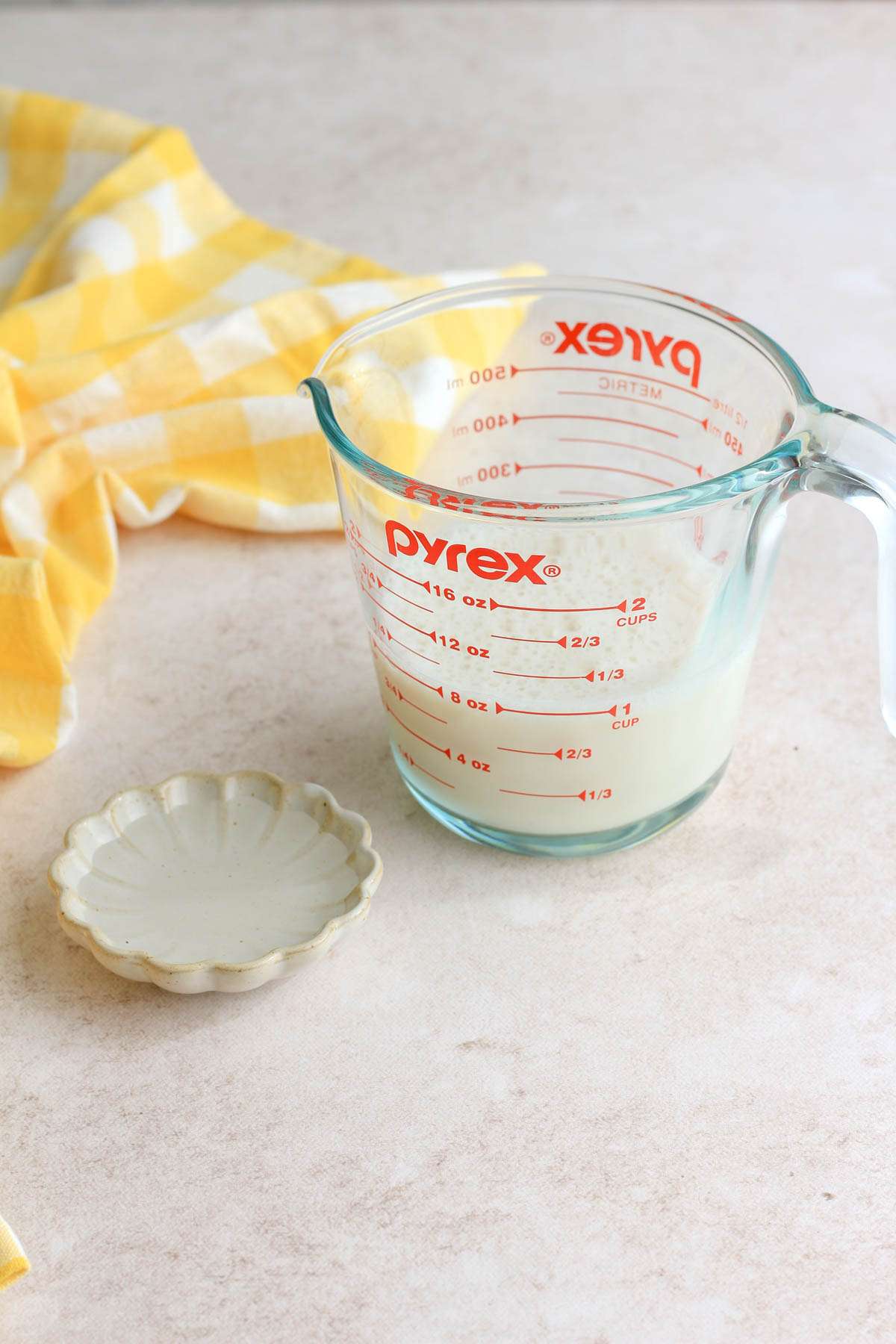
Step-by-Step Directions for Vegan Buttermilk
- Pour dairy free milk into a liquid measuring cup.
- Add lemon juice or vinegar to the liquid measuring cup.
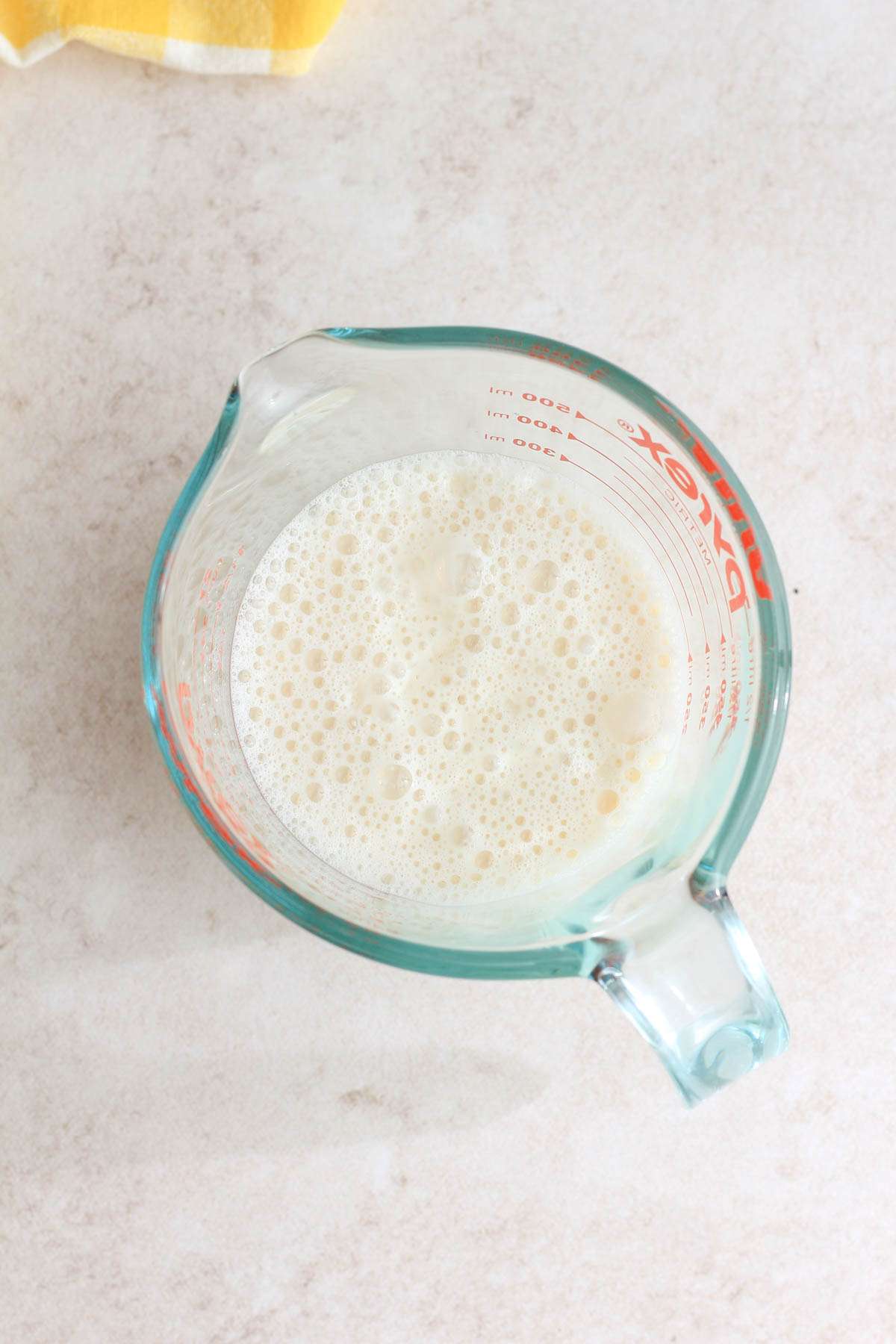
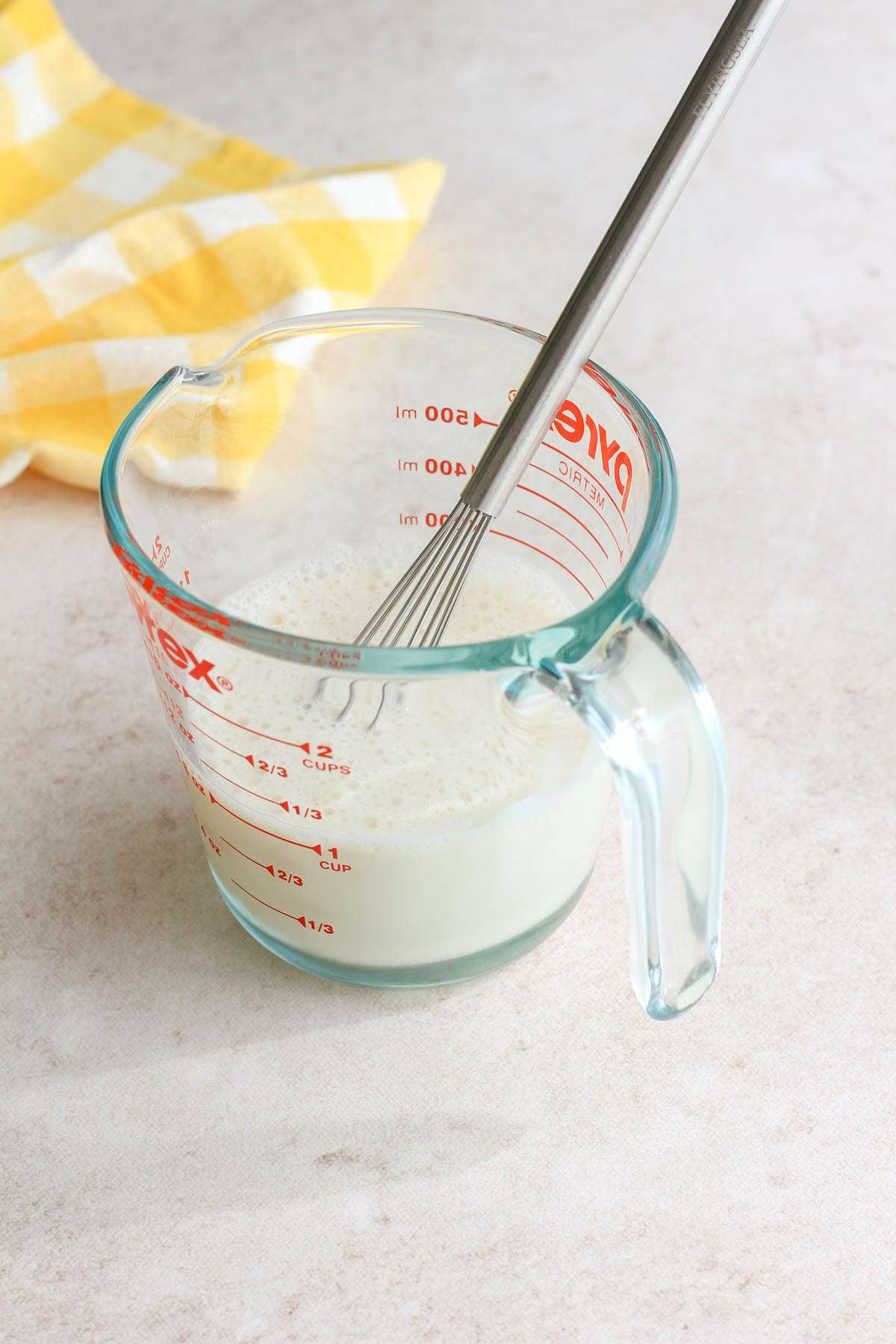
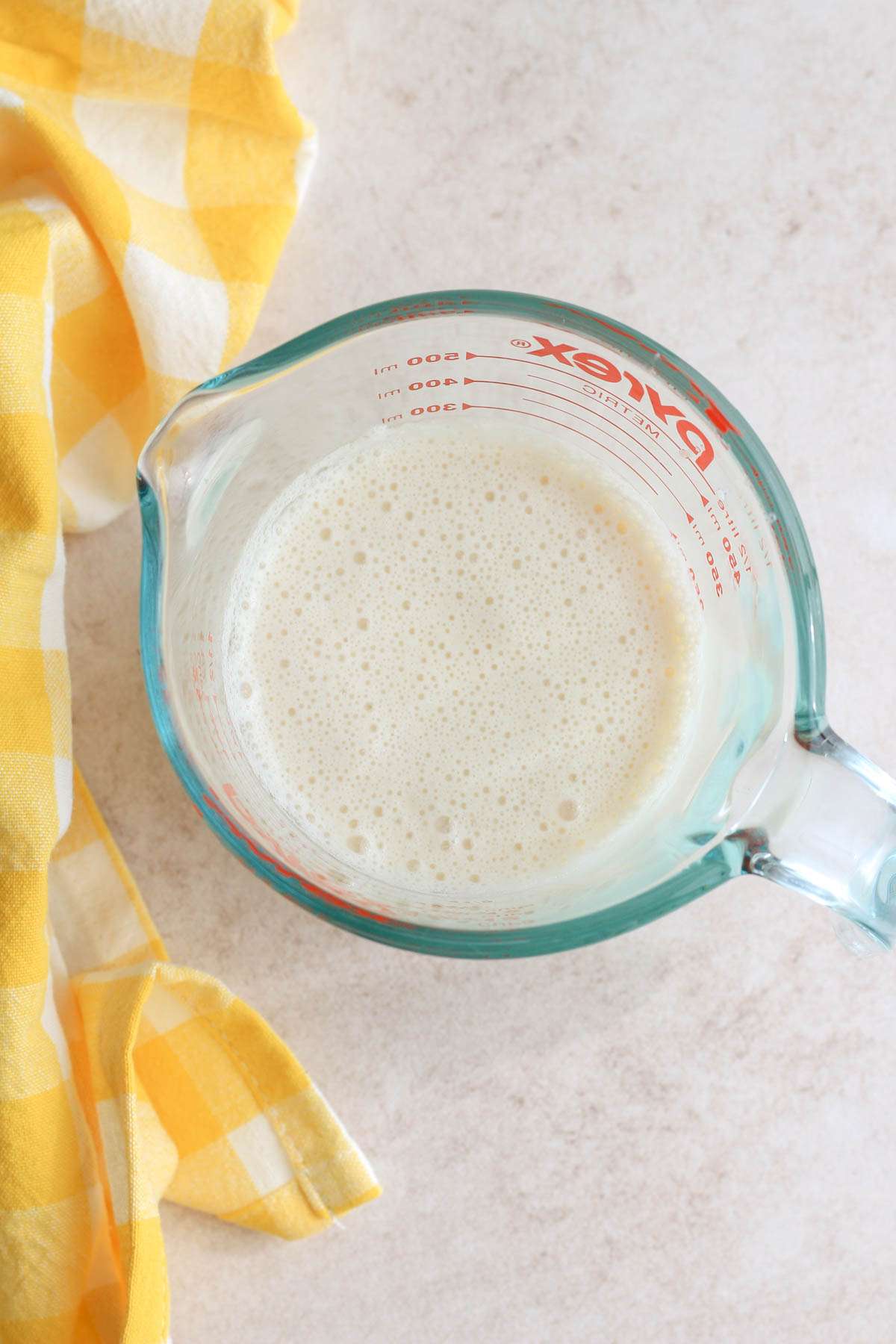
- Stir and let sit for at least 5 minutes before using.
- If you are not using right away, place in an air tight container in the refrigerator and store up to 3 days.
Does the Vegan Buttermilk Impact Recipes?
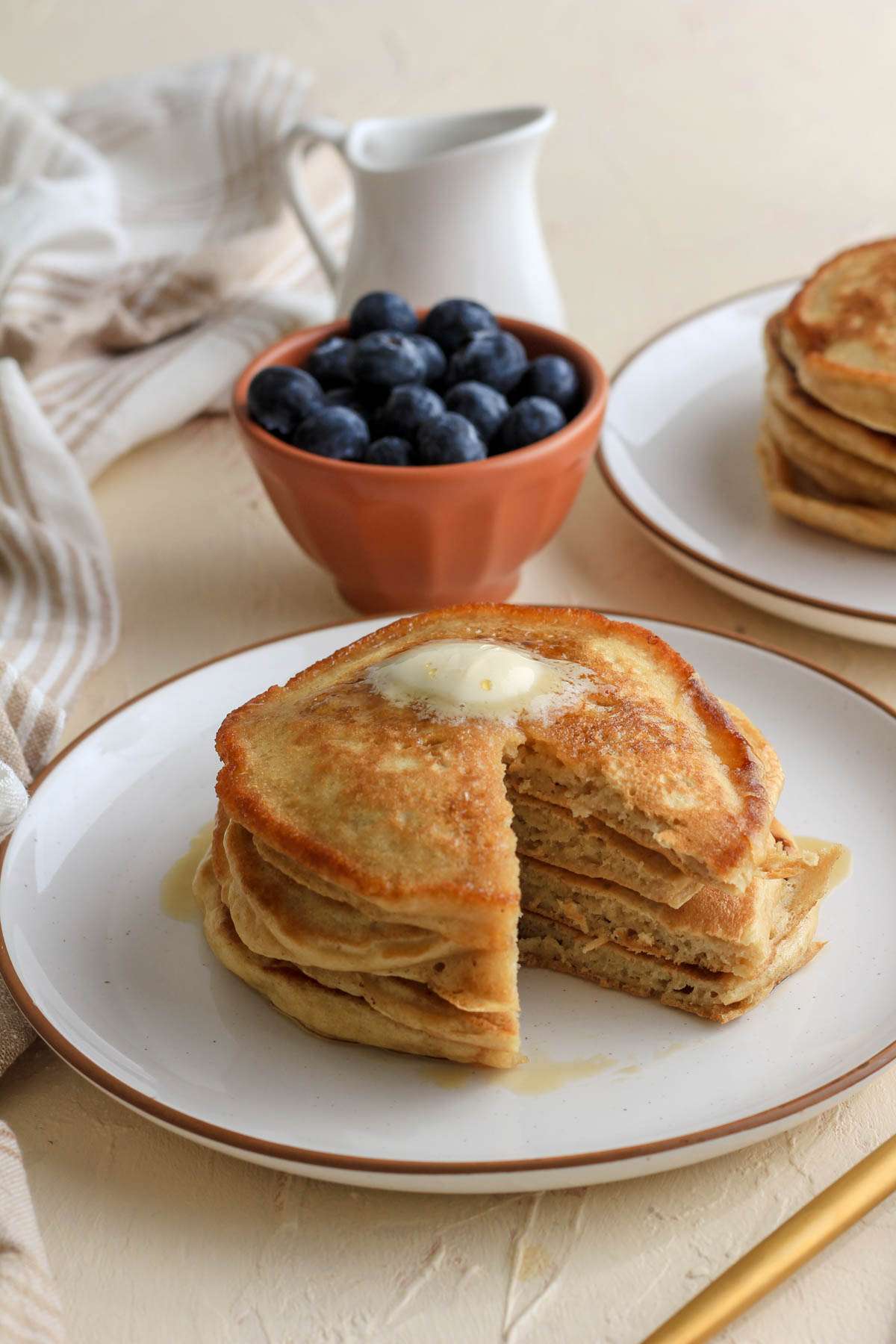
After testing the different plant-milks to make vegan buttermilk I wanted to know how each would impact my buttermilk pancake recipe.
I found that the results for the pancakes mirrored the dairy-free milk results. Ranking from best to worst I found:
- Soy Buttermilk– Large bubbles formed in the batter resulting in fluffy, mile high pancakes.
- Almond Buttermilk- Large bubbled in the batter gave way to equally thick and fluffy pancakes.
- Coconut Milk– Medium sized bubbles, still made thicker and fluffy pancakes.
- Oat Milk– Many small bubbles resulted in thin watery pancakes that spread all over the pan.
FAQs About Dairy-Free Buttermilk
What is the best acid to make dairy free buttermilk?
I found both regular vinegar as well as lemon juice to work well in making dairy free buttermilk.
Is there a difference between fresh lemon juice and bottled lemon juice?
When it comes to making homemade buttermilk there was no difference between fresh and bottled lemon juice. Fresh and bottled lemon juice had the same pH and can be used interchangeably to make vegan buttermilk.
How long can you store dairy free buttermilk?
When kept in an air tight container in the refrigerator, dairy free buttermilk keeps up to 3 days.
Why did my vegan buttermilk separate?
Separation is a natural occurrence when making dairy-free buttermilk. Simply mix the dairy-free buttermilk back together before using.
Uses for Vegan Buttermilk
There are some recipes that are just better with buttermilk. Here are a few different recipes I use vegan buttermilk to keep them deliciously dairy-free.
- Oatmeal Pancakes
- Buttermilk Pancakes
- Everything Bagel Scallion Biscuits
- Texas Sheet Cake
- Skillet Biscuits
Did you make this vegan buttermilk for your baked goods? Feel free to leave a review or let me know in the comments below how it went.
Looking for more ways to get the dairy-free details? Check out my newsletter where I share reader favorites, seasonal classics, and helpful tips for going dairy-free!
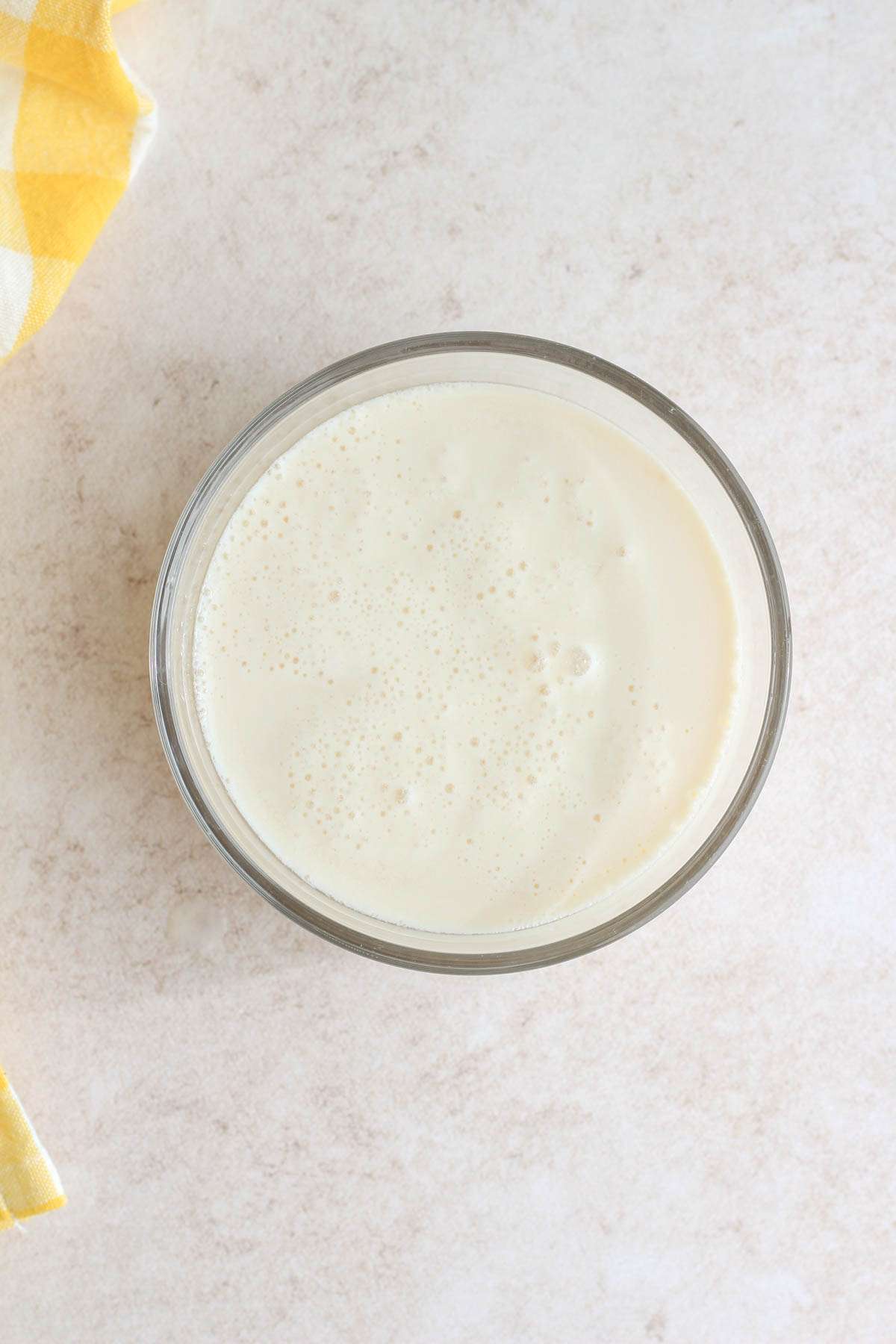
Dairy-Free Buttermilk
This quick and easy recipe for making dairy-free and vegan buttermilk comes together in under 10 minutes for the most tender baked goods imaginable.
- Prep Time: 10 minutes
- Total Time: 10 minutes
- Yield: 1 cup 1x
- Category: Breakfast
- Method: Mix
- Cuisine: American
- Diet: Vegan
Ingredients
- 1 cup Non-dairy Milk
- 1 Tablespoon Vinegar or Lemon Juice
Instructions
- Pour 1 cup of non-dairy milk into a liquid measuring cup.
- Pour 1 Tablespoon of vinegar or lemon juice into the non-dairy milk and stir to combine.
- Allow the mixture to sit for 5-10 minutes to create a vegan buttermilk.
Notes
I would recommend soy milk or almond milk for the closest consistency to cultured buttermilk.
Some of the links above contain Amazon affiliate links. These are products and brands I use in my kitchen daily. They pay me a small commission for the referral at no additional cost to you.